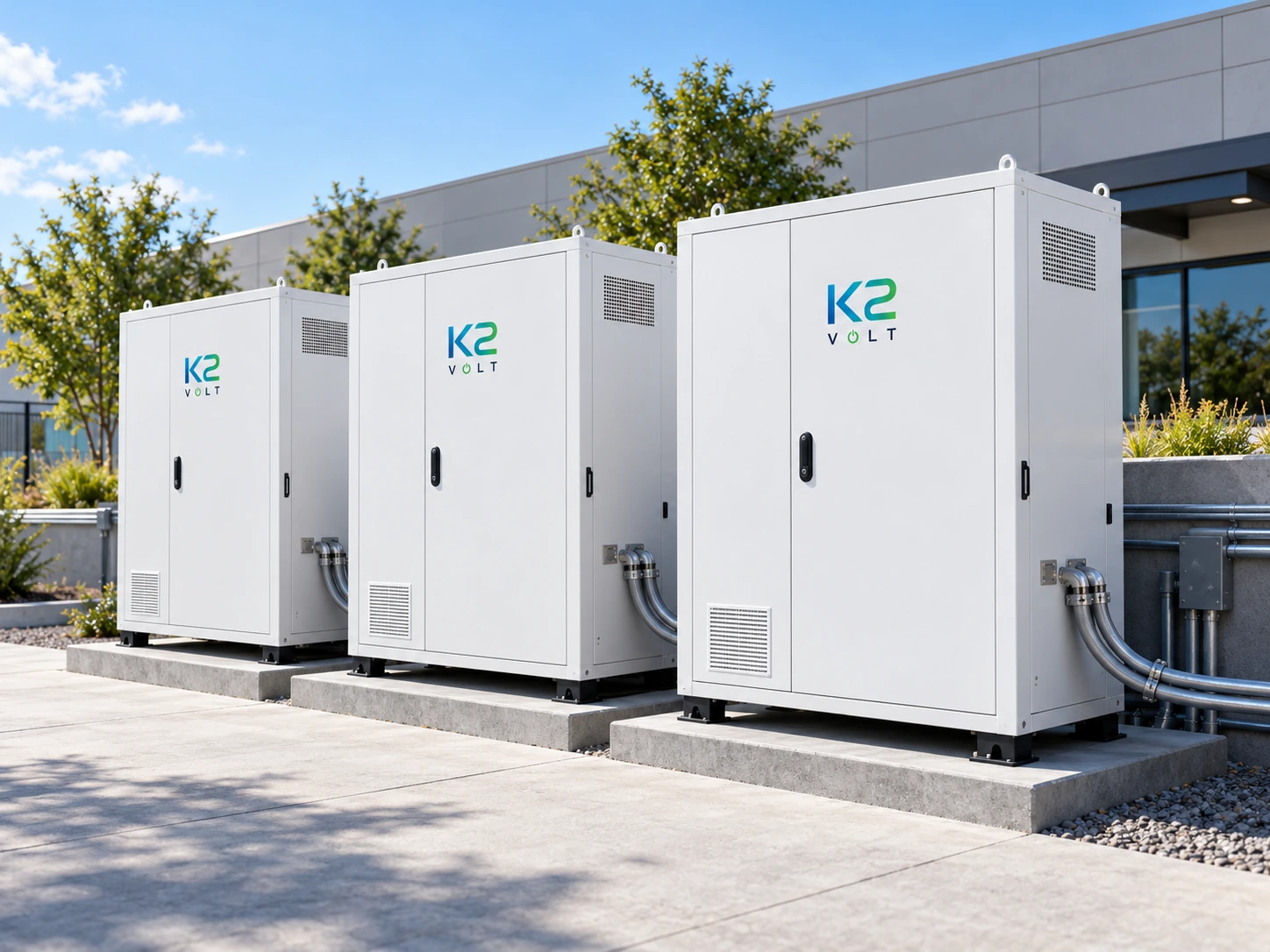
K2VOLT commercial energy storage system

Technology / System architecture

Energy is a system.
Design it as one.

Battery capacity, power equipment and energy controls each have a role. Our approach starts by defining how those layers work together at the site.

Three connected layers

Capacity. Power.
Operating intelligence.

Begin with the application. Define energy needs, electrical requirements, and the operating scope together so the project can be configured around its actual conditions.

An engineering approach—not a guarantee that every catalog item includes every function. Final capabilities are confirmed in the project specification.

01

Energy capacity

Battery systems

Define how much energy the application needs, how it will be used, and the battery operating conditions that matter at the site.

Define during project planning

  • Load profile and operating duration
  • Battery format and installation environment
  • Thermal design and operating limits
02

Electrical integration

Power equipment

Match power-conversion and electrical equipment to the site’s loads, connection requirements, and operating objective.

Define during project planning

  • Required power and connection interfaces
  • Protection and interconnection requirements
  • Backup scope and commissioning responsibilities
03

Operating coordination

Energy controls

Define the information, permissions, and asset interfaces needed to coordinate an energy system. Visibility and automation depend on the agreed integration.

Define during project planning

  • Available telemetry and supported asset interfaces
  • Dispatch objectives and control permissions
  • Network, cybersecurity and alarm ownership
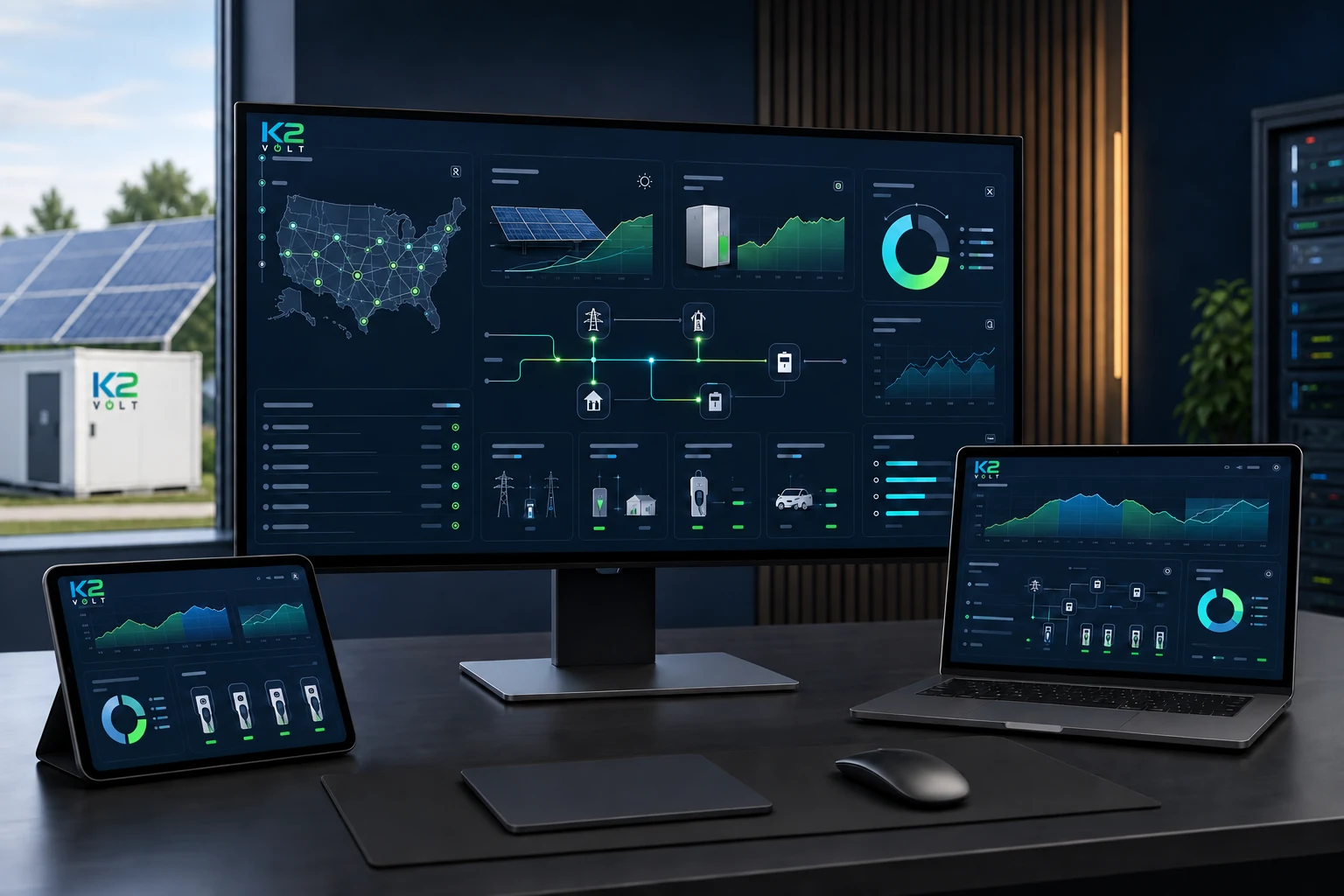
Illustrative K2VOLT energy-control interface across desktop, laptop and tablet displays
Energy-control concept visualization · not a live dashboard or a guarantee of available features.

K2 Energy OS

The operating layer.
Not another battery.

The current catalog presents K2 Energy OS as energy-management and control software. Its role is to support asset visibility and operating coordination through the interfaces defined for the project.

It is not a standalone battery, UPS, or complete AIDC power module. Supported equipment, data points, control functions, and integration requirements must be confirmed separately.

Explore K2 Energy OS

From concept to configuration

Clear interfaces.
Clear responsibilities.

Product selection is one part of a complete project. Define the electrical, software, and service boundaries before finalizing the configuration.

Explore application-specific planning
01

Site & electrical scope

Identify the load profile, available connection, installation environment, and operating priorities.

02

Control & interface scope

Confirm asset compatibility, data availability, control permissions, and network responsibilities.

03

Commissioning & lifecycle scope

Agree on testing, handover, alarm ownership, maintenance, and the support and warranty scope.

Start a conversation

Your next energy
project starts here.

Share the application, location and operating goals. Start a discussion around the right configuration for your site.

Talk to K2VOLT